SAINT-ANGE (French, active in 1st half of XIX c.)
Louis-Savinien Dupuis, better known under the pseudonym Saint-Ange (Louis-Savinien Dupuis, dit Saint-Ange), was not only a master of pencil portraits, but also one of the leading artists-designers of France in the first half of the 19th century.
His work can be divided into two main categories:
1. Intimate graphic portraits
As with your image, Saint-Ange created refined portraits of his contemporaries. His works in this genre are distinguished by:
Technique: Use of Italian pencil or charcoal combined with white lead (chalk).
Attention to detail: He masterfully conveyed the texture of fabrics—the sheen of satin, the transparency of lace, and the softness of velvet.
Likeness: His portraits were considered very precise and "lifelike," making him a popular artist among the aristocracy and bourgeoisie of the Louis-Philippe era.
2. Design for the Sèvres Porcelain Manufactory
Saint-Ange was for a long time the chief draftsman for the famous Sèvres porcelain manufactory. Many masterpieces of French decorative art were created from his sketches:
Vases and services: He designed the shapes and paintings for monumental vases (such as the "Claudion Vase"), which are now housed in the Louvre and Versailles.
Style: His designs combined elements of antiquity, the Renaissance, and the then-fashionable "Second Rococo" style.
Where can one see his work?
In addition to private collections, works signed S. Ange or St. Ange are held in major museums:
Louvre (Paris): Sketches and drawings for decorative pieces.
Museum of the Sèvres Manufactory: A vast collection of drawings and finished porcelain pieces.
National Museum of the Château de Versailles: Portraits and interior decoration.
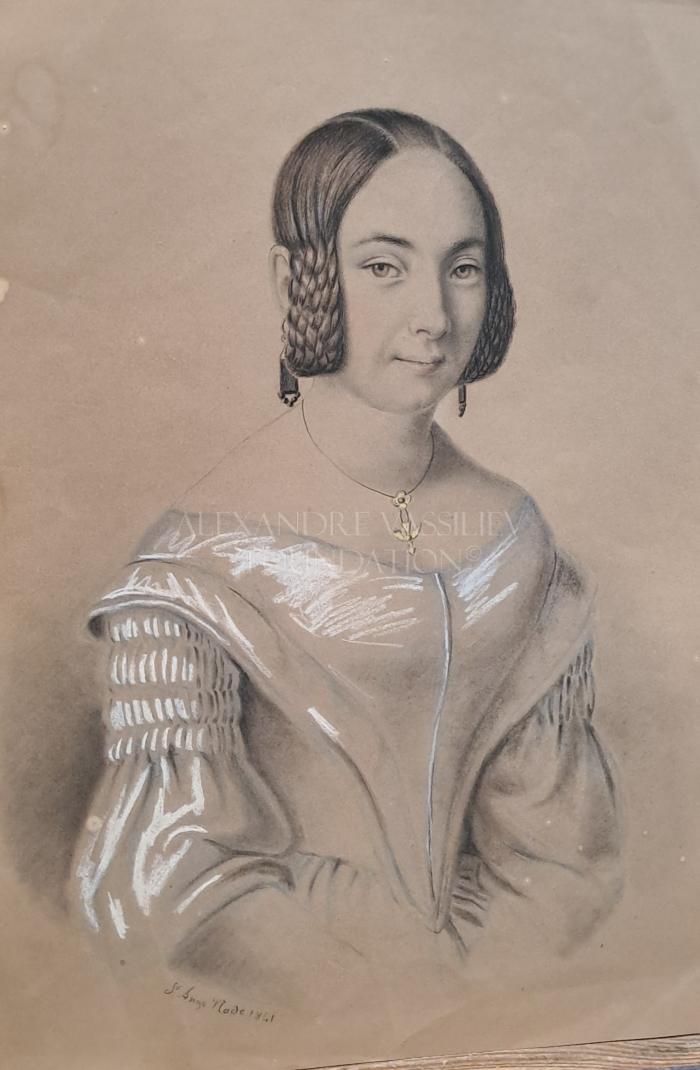
Related Object: Portrait of a young woman